
Making time to attend all the lectures, finish up the assignments and still find time to socialize is something we all have struggled with once in a while as post-secondary students. Managing time efficiently can be is the key to success and with the right techniques, you can in fact find balance without feeling overwhelmed. This blog post will explore time management strategies that you can employ in your daily life as a student along with some practical tips to help you in educational and professional success.
1. Prioritization: Focusing on What Matters Most
There are multiple things that require your attention but some things might need attention before others. By creating a to-do list every morning, you can decide what you want to prioritize for the day. This can include starting an assignment or coming up with the outline if submissions are coming up or even social events that require your participation. One powerful tool used for prioritization is the Eisenhower Matrix that encourages individuals to distinguish between urgent tasks and important tasks. This matrix categorizes tasks into 4 main sections including an urgent and important, only urgent, only important and a neither section.
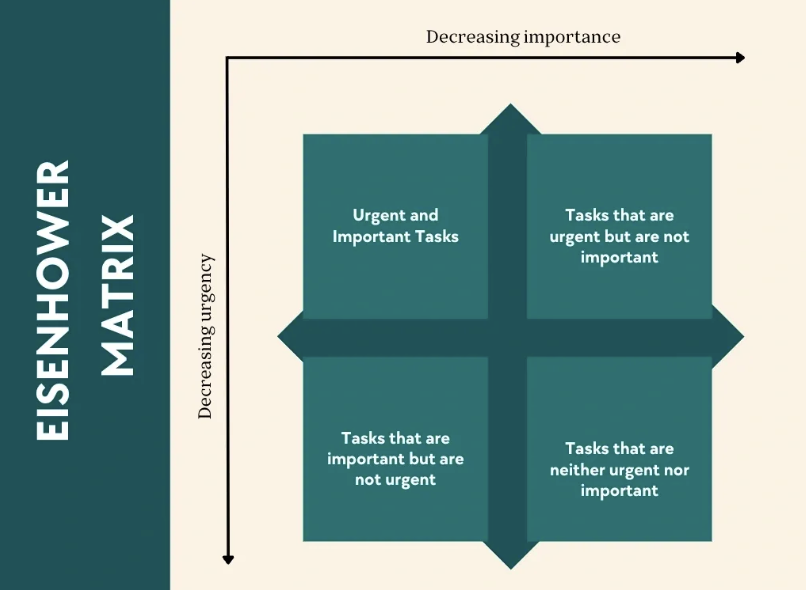
Examples of Urgent and Important tasks can include an assignment being due the next day. Tasks that are long-term projects like readings that need to be analyzed by the end of the semester can come under an important tasks that is not so urgent. Other events like a friend’s call during productive hours can be urgent but not so important. Tasks that are not urgent and not important can be sometimes eliminated or delayed. By identifying where you tasks fall in this matrix, you can allocate time and attention to tasks strategically and reduce your stress.
2. The Pomodoro Technique: Stay Focused with Time Blocks
Maintaining focus on a task can be a challenge, especially with constant distractions like your phone or social media. One technique that has worked wonders for countless students is the Pomodoro Technique. I have myself been incorporating this technique in my academic tasks to boost productivity without tiring myself. You start by planning out your tasks and setting a timer for 25 minutes. Once the timer goes off, you take a 5 minute break and start another session. I like being more flexible with it and even do 50 minute sessions depending upon the task on hand and balance with 15 minute movement breaks. This allows me to feel active and less drowsy when I work by recharging my mind and body after every session. There are several apps that make different versions of pomodoro to cater to different audiences and engage individuals with visual appeal as well. One such app is Forest that encourages you towards tree plantation for the focus you invest in your work.
3. Scheduling: Your Best Friend in University Life
In a busy life as a post-secondary student, scheduling your tasks will keep your organized by rendering you with a visual representation of how your day, week or month looks like. You can choose whether you want to use online calendars, physical or digital planners and manage your tasks and deadlines. I start by blocking out class times so I never have these overlapping with other tasks. I also like to keep fixed time for group study sessions and setting exam and assignment deadlines. Lastly, do not miss you set up time for self-care or social time as this often recharges you and provides you with rest and some relaxation. I like to keep my planning simple with Apple Calendar and a basic To-Do List on one-note but you can choose what suits you and enhance your productivity at school.
4. Balancing Academics and Social Life
Most people will emphasize on the importance of making the most out of your university experience from enjoying the experiences of being at your institution to spending time on academic tasks. You can start to develop clarity in your mind and then set boundaries so you know when to spend time studying and when to give time to work-out. You can also learn to say no so you do not feel pressured to attend every social event and resent it. A lot of students aim to schedule a downtime and spend that time relaxing and recharging in ways most suited for them. This can be anything that brings you joy and help you stay focused.
5. Self-Care: Making Time for Yourself
Amidst all the academic pressure and social commitments, it’s easy to forget to take care of yourself. But self-care is crucial for your mental and physical health, and you must make time for it. You can start by taking time for regular walks or even taking about time for meditation. You could perhaps have your comfort meal once a week or even focus more on sleeping well. Do not take self-care for granted and do not forget that you can only function better if you are able to take better care of yourself.
These strategies have worked for me and as much as I hope they do for you, what works for one person may not work for another. Feel free to experiment with these techniques and see what suits your pace and improves your productivity. One thing that you must remember is that you decide where you invest your time. Stay motivated, stay focused and make the most out of every moment.