
You planned a whole romantic dinner with fairy lights, candles, and their favorite food but they didn’t look that impressed.
Meanwhile, they fixed your broken laptop last week, and you barely noticed.
Both of you are thinking the same thing:
“Why do I even try? They clearly don’t care.”
Here’s the plot twist: you both care, but you’re speaking completely different love languages. No wonder it feels like you’re talking into the void.
What Are Love Languages?
Dr. Gary Chapman’s Five Love Languages theory isn’t just cute Instagram quiz content. It’s a proven framework to understand how people express and receive love.
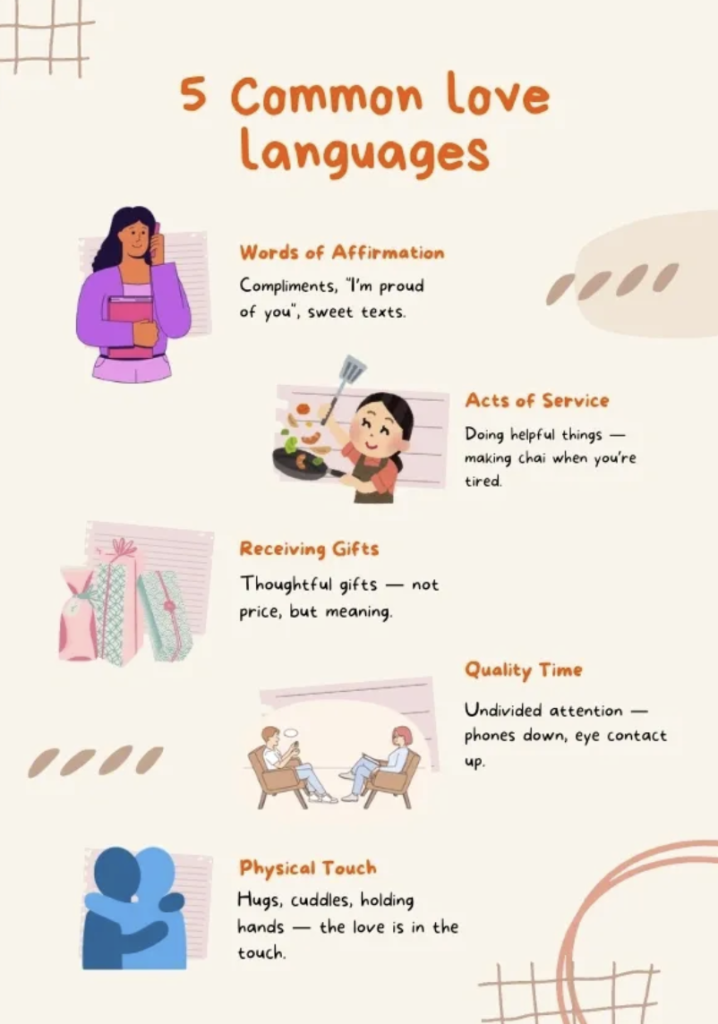
Let’s say you’re all about Words of Affirmation and you want “I miss you” texts and romantic captions. But your partner’s love language is Acts of Service and they think fixing your WiFi or dropping you to class is peak romance.
Neither of you is wrong. You’re just broadcasting love on two completely different channels. This is the love language mismatch struggle.
Psychologists believe love languages are shaped by:
- Childhood Experiences — How did your parents show love? Words? Hugs? Gifts?
- Cultural Influences — In some cultures, providing is love; in others, it’s all about open affection.
- Past Relationships — What worked (or hurt) in past relationships often defines what you crave now.
Love languages aren’t just romantic. They apply to literally every relationship.
- Your bestie might feel closest to you when you spend time binging shows together (Quality Time).
- Your mom might feel most loved when you do the dishes without being asked (Acts of Service).
- Your sibling might want random cute gifts (Receiving Gifts) because that’s how they connect.
How To Find Out Your Love Language (And Your Partner’s)
1. Ask Yourself: When do I feel most loved: after a compliment? A hug? A thoughtful surprise? What do I naturally do when I love someone: do I write them notes, buy them things, help them with stuff?
2. Take The Quiz Together
Chapman’s official quiz is super fun to do with your partner, friends, or even your parents. Because yes , your mom also has a love language. And we can have different styles with different people or at different times.
3. Observe Their Natural Style
If they always fix things for you, they’re probably Acts of Service. If they can’t stop touching your hair, they’re a Physical Touch person. If they send morning texts and cute notes, they’re Words of Affirmation.
What To Do When You and Your Partner Have Different Love Languages
No surprises here, a lot of us are bound to have different love languages, we may even have different things we like at different times of our lives and we may even like acts of service and physical touch to the same extent. However, we can use some techniques to understand these differences between ourself and our partners to avoid conflicts and enhance appreciation.
1. Learn Each Other’s Language (Even If It Feels Awkward)
If you’re not a words person but your partner is, sending a random “You mean a lot to me” text might feel unnatural — but to them, it’ll feel like fireworks.
2. Stop Expecting Your Language Back
Just because you show love with gifts doesn’t mean they will. It’s about receiving love in their way and not expecting a perfect mirror. However, talk about what you’d like and let them know.
3. Mix It Up
Even if you have a primary language, everyone can like a little mix of all five.
- Text them sweet things (Words).
- Surprise them with their favorite snack (Gifts).
- Plan a no-phone coffee date (Quality Time).
- Fix their laptop (Acts of Service).
- Hold their hand while walking (Physical Touch).
Love is multilingual.
Most couples (and friends, and families) don’t have the same love language. That’s normal! The key isn’t to change who you are. It is like being bilingual. Learn to speak their language while teaching them yours to improve romantic relationships.
It’s literally just good communication with a romantic twist. Loving someone isn’t just about feeling love, it’s about learning how to show love in a way they can actually recognize. Love is a lot like WiFi meaning if you’re not on the same frequency, the connection’s gonna suck
References
- Chapman, G. (1992). The Five Love Languages: How to Express Heartfelt Commitment to Your Mate. Northfield Publishing.
- Egbert, N., & Polk, D. (2006). Speaking the Language of Relational Maintenance: A Validity Test of Chapman’s Five Love Languages. Communication Research Reports, 23(1), 19-26.
- Givertz, M., Segrin, C., & Hanzal, A. (2009). The Association Between Satisfaction and Commitment Differs Across Marital Status and Gender. Journal of Social and Personal Relationships, 26(5), 585-604.
- Official Love Languages Quiz: https://www.5lovelanguages.com/quizzes/