
Parenthood is a transformative experience, one that alters the course of your life. As children, we have all witnessed how our parents balance their various roles from professionals to partners, friends, and caregivers. But what happens when they become so deeply engrossed in the role of being a parent that they begin to lose sight of their other identities? This blog will explore how many parents, especially mothers in Indian society, tend to over-identify with their parental role, giving up everything from self-care to personal aspirations.

Having children changes not only how you view the world, but also how you view yourself. From the moment you become a parent, a new identity forms, and it takes precedence over everything else. As we grow up, we already see our parents balancing multiple roles as employees, partners, community members yet, often, it seems their role as a parent becomes their primary identity. The sacrifices they make (giving up their careers, personal goals, or relationships) may feel necessary, but over time, this can lead to an identity crisis for parents and also affect the children.
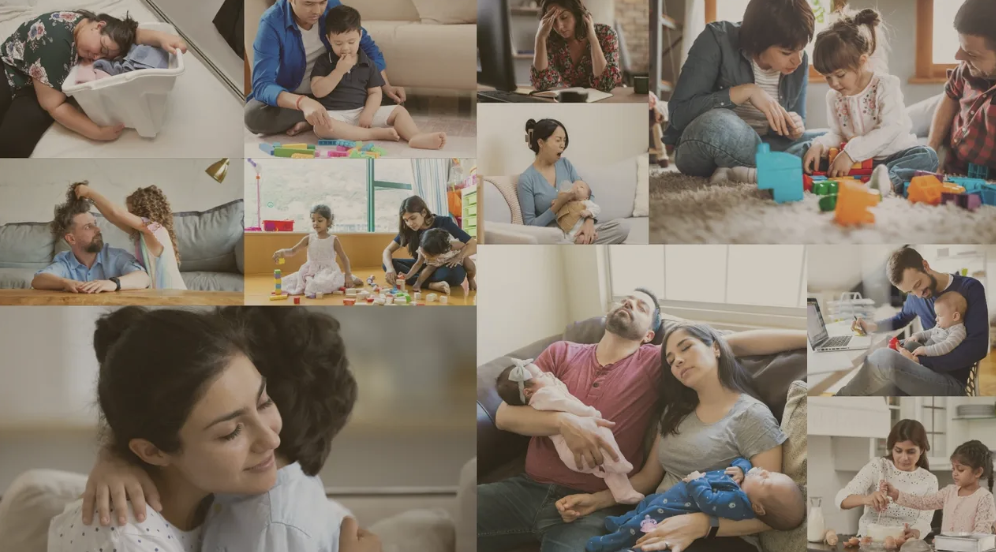
Why do people over-identify with Parenthood? According to role theory in sociology and psychology, individuals take on various roles, and ideally, they manage to balance them. However, over time, a person can experience role strain when one role (like parenting) begins to dominate their life, leaving little room for other identities. Parents may feel they are defined only by their children, leading to feelings of inadequacy when their children eventually grow up and begin to lead independent lives. When a parent focuses solely on their child, they also risk neglecting their own emotional needs, leading to burnout. Mothers, especially in Indian society, are often expected to be the primary caregivers, and this can take a toll on their mental and emotional well-being.
Although on the surface, this seems like an individual-level issue, it really impacts your relationships with your children and their life. Over-identification with parenthood can result in attachment behaviors that go beyond healthy attachment. Children may become emotionally dependent on their parents, not just for care, but for a sense of security and identity. Over-attachment can cause children to depend on their parents for emotional regulation, making it hard for them to develop self-efficacy or handle challenges independently. Even in trying to do something independently, these children may feel guilty for distancing themselves from their parents who have given so much of their emotional energy to them. And lastly, when parents are overly involved, children might feel suffocated and unable to establish their own identity. This can lead to a lack of emotional autonomy, where children struggle to differentiate themselves from their parents’ values and desires.
We can recognize this over-association as negative in our lives and our children’s lives but we also need to acknowledge the role of context that shapes our actions to an extent. In Indian society, mothers, in particular, are often expected to give up everything for their children. The concept of the “selfless mother” is deeply ingrained, where mothers are expected to sacrifice their personal desires, careers, and relationships to fully devote themselves to their children. This has been normalized and celebrated, but it comes with hidden costs to both the mother’s emotional health and the child’s autonomy. Keep in mind that a mother who gave up her career and personal passions to devote herself to raising her children would over time, lose touch with her own identity. So, when her children grow up and become independent, she may struggle to find fulfillment and purpose outside of motherhood. Her emotional exhaustion can thus lead to burnout. As the child also grows, they struggle with forming independent opinions and often feel guilty when pursuing their own interests because of the deep emotional dependence on their parents. As children mature, they might start feeling resentment or confusion about the intense emotional bond. The struggle to establish independence can lead to emotional friction between the parent and child and loss of autonomy for the child.
While, it can take generations to completely let go of these societal expectation that have been ingrained in our minds, we can take small steps. Parents, especially mothers, must learn to prioritize self-care and rediscover their identity outside of parenting even if slowly and in small things. Encourage yourself as a parent to pursue hobbies, career goals, and self-growth alongside their role as caregivers and this will also encourage your children to engage in other activities and make them feel more independent. In creating emotional boundaries and changing how your view your role in your child’s life, you as a parent can foster an environment where your children feel empowered to make their own decisions and grow without unnecessary pressure.
Now you know that as much as you love to give your children all your time and effort, over-identifying with the role of a parent causes both emotional burnout for the parents and stunted emotional growth for the children. It’s time for Indian society to redefine motherhood. To acknowledge that while parental love is essential, it must not come at the cost of a parent’s emotional health or the child’s independence. Parents need to embrace their multifaceted identities and not let their children define their entire existence. This way, you can undoubtedly be a Great Parent without really losing yourself.
References for Further Reading:
- Harris, J. R. (1998). “The Nurture Assumption: Why Children Turn Out the Way They Do.”
- Bowlby, J. (1988). “A Secure Base: Parent-Child Attachment and Healthy Human Development.”
- Stern, D. (1985). “The Interpersonal World of the Infant.”
- Doherty, W. J., & Kane, L. S. (2000). “The Role of Family Systems in Parenting.”