
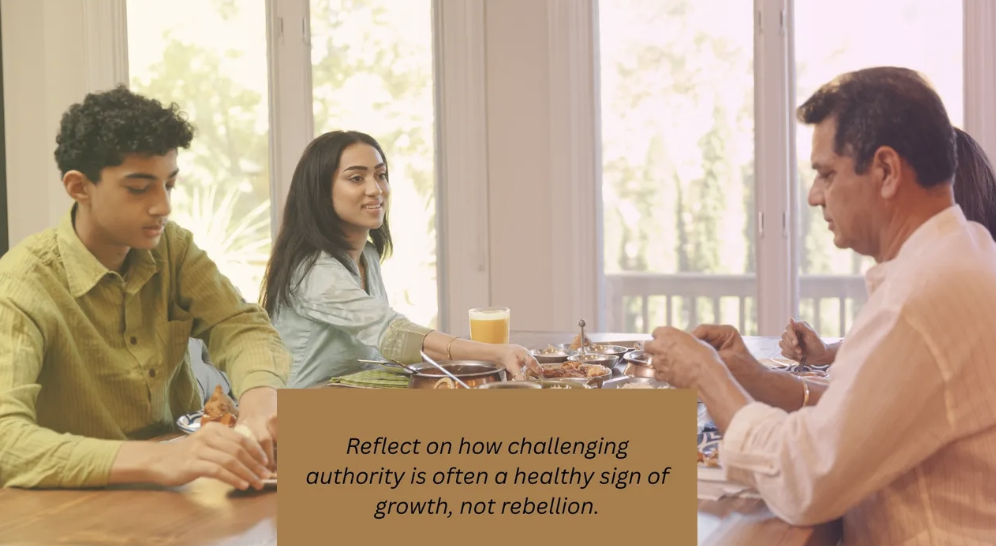
“Don’t you dare talk to me like that!” “Who do you think you are, answering back like this?” “We never had the audacity to question our parents’ decision back in our childhood!”
If any of this sounds familiar it’s because “talking back” is often one of the most triggering things a teenager can do in an Indian home. But what if I told you that talking back isn’t always about disrespect?
In fact, sometimes, it’s about growth.
As a psychology student and parenting coach, I’ve had so many parents come to me confused and hurt: “My child used to be so obedient, so sweet and now everything’s a debate! These kids have to question everything.”
And what I gently remind them is: Your child is becoming a person. Not just your person.
Around adolescence, the brain goes through a massive developmental shift. Teens start seeking independence, testing ideas, questioning authority. It’s not just rebellion. It’s practice. They’re learning how to think, they are becoming more curious to learn and know.
As parents however, you may be hurt because of this. Especially in Indian families, respect is often defined as quiet compliance from agreeing, listening, nodding, obeying. So when a teenagers starts challenging your “because I said so”, or starts questioning traditions (“Why should I touch everyone’s feet?”), or starts to say no to expectations they didn’t choose…
It feels like they’re attacking you. But really, they’re exploring themselves. They’re building boundaries. (“I need space.”) They’re seeking voice. (“Please listen to my opinion.”) They’re testing safety. (“Can I disagree with you and still be loved?”)
This last one? It’s huge. Many teens “act out” just to see if your love stays intact when they stop being agreeable. Instead of asking why are they being so rude try asking: “What’s really important to you in this moment?” or “How can we talk about this without shouting?”
This doesn’t mean there are no boundaries. It just means you’re making space for dialogue instead of just discipline. This helps them feel connected and have the desire to communicate.
One father I talked with felt deeply disrespected when his daughter said, “I don’t believe in your rules.” He took it personally. But upon discussion, we realized she wasn’t rejecting him. She was seeking some say in the rules that apply to her. She was seeking choice. She was asking if they can co-create a set of rules that include her voice too.
That shift from power struggle to shared space, changed their relationship.
Talking back isn’t always backtalk. Sometimes, it’s a teen’s first attempt at saying: “This is who I am.”
And that voice? It doesn’t need to be shut down. It needs to be shaped, guided, and heard. If you’re unsure how to stay calm, connected, and in your role as a guide (not a guard), I’d love to help.