A way to point at what you can’t yet say.
You start with a blank outline of a body. Then you put things on it: colour, texture, symbols, words. Where does this live in you? What shape is it? What colour? What sits next to it? It sounds almost too simple to be a method. It isn’t, and this page is about why.
Nothing arrives pre-sorted.
A blank outline
Traced around your own body on a sheet big enough to lie down on, or printed on A3 when the room is small. Stick figures and scribbles are fine. No artistic skill needed.
You place things on it
Colour, texture, symbols, words, drawings. On a body you have to put a feeling somewhere, and choosing where is already a kind of answer.
Now it’s outside you
Once something is drawn, it sits on paper where you can look at it, question it and, slowly, be a little kinder to it.
It’s not new, and it’s not mine.
Body mapping has a lineage, and the lineage matters, because it tells you what the method was built to do.
A research method
Cheryl MacCormack and Alizon Draper introduced it in Jamaica, asking women to trace their bodies and show their experiences on them. What came out was something a questionnaire could not have reached.
Cape Town
The Bambanani Women’s Group, women living with HIV, made body maps with the artist Jane Solomon and Médecins Sans Frontières. Their maps were published in Long Life: Positive HIV Stories, and showed the method could hold trauma, resilience and survival on one sheet of paper.
Research, therapy and teaching
It has been used with refugees, in trauma therapy and in body-based teaching. Across very different settings, people report more self-awareness, and often surface things they had not been able to say before.
A way to start a conversation
Today it is being explored as a communication aid in community and educational settings. That is where my work sits.
You don’t need the word first.
India has a huge range of languages and a lot of stigma around mental health, and the two make each other heavier. Someone may not have the emotional vocabulary in the language of the clinic. Or they may have it, and still not feel able to use it at home.
Research in cross-cultural psychiatry has long shown that in much of South Asia, distress is more often felt and described in the body. The heavy chest. The tight shoulder. The stomach that has been off for weeks.
Body mapping lets you point. It lets you colour something in. It lets the body do the reporting it is already doing, in a way someone else can see.
Three small shifts
- Placement forces a choice. “It’s complicated” costs nothing in a sentence. On a body, you have to put it somewhere.
- Once it is drawn, a belief you have carried for years can finally be looked at, and argued with.
- Seeing someone else put the same feeling in a completely different place loosens your assumptions in a way reading rarely does.
The rules I hold tightly.
Not art therapy
Related, but not the same. It doesn’t need artistic skill and doesn’t aim at an artistic result.
Not a diagnosis
Nothing on a map tells you what someone has. A symbol in a place is not a sign of anything.
I don’t interpret
I won’t tell you what your drawing means. The meaning belongs to the person who drew it. My job is to ask, and then to be quiet.
Not a replacement
It sits alongside proper care, assessment and referral. It can help start a conversation. It doesn’t stand in for one.
Nothing is compulsory
You choose what goes on the map and what you share. You can skip any layer, any time.
Safety comes first
Grounding before and after, private follow-up instead of public sharing, and if anything points to real risk, it is met directly, straight away.
Where the evidence stands. The research so far is promising, and mostly small and exploratory. Scoping reviews in The Lancet Psychiatry (2023) and The Arts in Psychotherapy (Buys, Peel and Buiten, 2025) both call for trained, trauma-informed facilitators and clearer guidelines before it is treated as established practice. I agree with them.
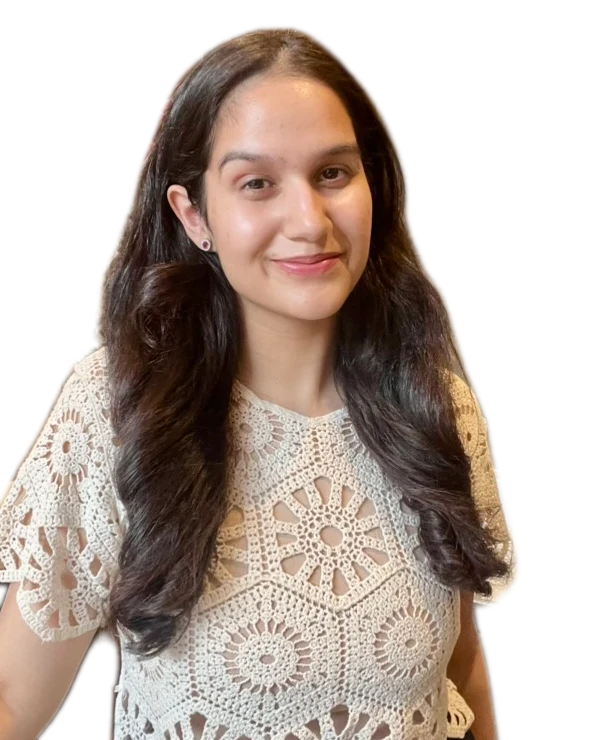
A map I keep coming back to.
I learned body mapping in the first year of my Master’s in Counselling Psychology at the University of Toronto (OISE), where we mapped our own identities onto the outline of a body, took it home and kept revising it. I never really stopped. Putting things on a body showed me what writing about them never had, and that’s the space I try to make for the people I map with now. My own map still isn’t finished, and I’m fairly sure it isn’t supposed to be.
Where to start.
1:1 body mapping
One feeling, mapped layer by layer, at your pace. Online across India, in English, Hindi or Punjabi. What happens in the hour
Book a 1:1 · ₹1,500Workshops
One feeling, one shared map, in a small online room. A date is set once the waitlist fills, and everyone on it hears first.
See workshopsBringing it to a school, college or team?
Sessions designed around your group. In person in Bengaluru, or online across India.
If you want to go deeper.
- Body mapping for arts-based inquiry in mental health research: a scoping reviewThe Lancet Psychiatry, 2023
- Body mapping as a therapeutic activity in psychotherapy practice: a scoping reviewBuys, Peel and Buiten. The Arts in Psychotherapy, 2025
- Body Maps: Art and MemoryThe Bambanani Women’s Group, Cape Town. Médecins Sans Frontières
- What Body Mapping Does Not DoFrom the writings
This page is psychoeducation: general information, not therapy, an assessment or a diagnosis, and not advice about your situation. Privacy
If you are thinking about harming yourself or don’t feel safe right now, please reach out straight away: call Tele-MANAS on 14416 (free, any time) or 112 in an emergency.