
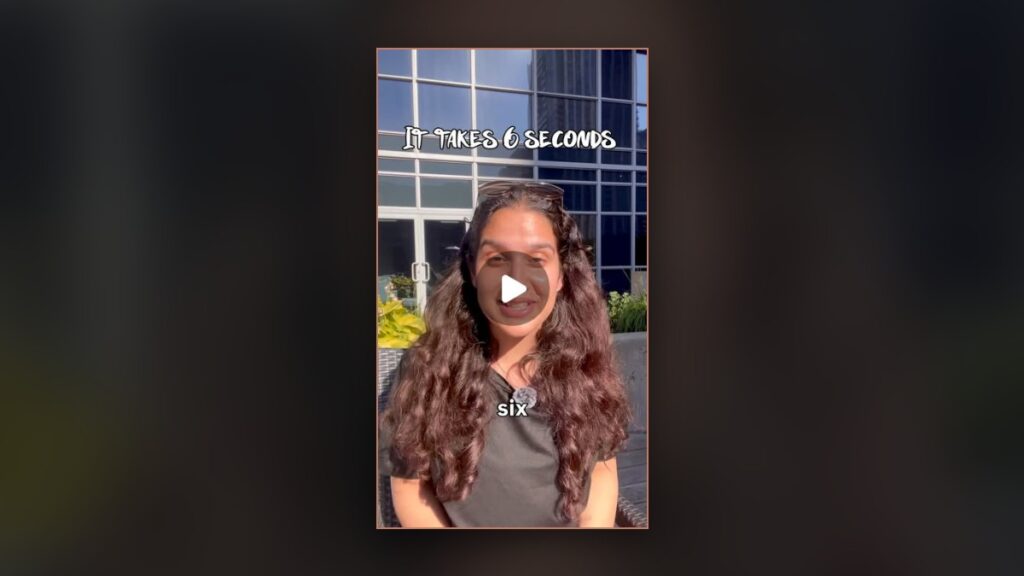
Count six seconds right now. Properly. One, two, three, four, five, six.
That is longer than you thought, isn’t it. It is noticeably longer than a normal hug, and it is much longer than the kiss most couples give each other on the way out of the door.
That gap, between what we actually do and six seconds, is one of the smallest and most reliable things you can change in a relationship.
Where the six seconds comes from
This is not something I made up. It comes out of John Gottman’s research, which is probably the most extensive body of observational work on couples that exists. His lab has spent decades filming couples interacting and tracking which ones stayed together, and a lot of what came out of it is about very small behaviours rather than very big ones.
The six second kiss is one of those. The idea is simple: a kiss long enough that you have to be present for it. Most everyday affection between long term partners is too brief to register as anything. It is a transaction. Six seconds is past the point where it can be done on autopilot.
A six second hug does the same job. So does holding on when the other person has already started to let go.
Why the length is the active ingredient
A two second hug is a greeting. It is a piece of etiquette and you can perform it while thinking about your inbox.
Around the four or five second mark, something has to give. You cannot maintain physical contact that long while mentally being elsewhere. Either you leave, or your attention arrives. Most of the time, attention arrives.
That is the mechanism. Not magic, not chemistry lectures. The duration forces presence, and presence is the scarce thing in a long relationship, not affection.
There is a second effect worth mentioning. Sustained affectionate contact tends to have a physiological calming effect. People who hug for longer tend to report feeling more settled afterwards, and there is a reasonable body of research on affectionate touch and stress response. But I would not lean on the biology as the reason. The reason it works is the attention.
When to do it
This is the part that makes it actually usable, because a technique without a trigger never happens.
The trigger is: whenever you see your partner after being apart.
After work. After they get back from somewhere. After you have been in different rooms for three hours. After anything. That moment already exists in your day, several times, and currently it is filled with either nothing or a two second contact while one of you is still holding a bag.
That reunion moment is not arbitrary. It is one of the few reliably repeated points of contact in a shared life, and what happens in it sets the tone for the next hour more than people realise. If you have ever had an evening go wrong and not been able to trace why, look at how the two of you greeted each other when you came in.
What it is not
It is not a fix for a problem.
I want to be direct about this, because small relationship advice gets sold badly. Six seconds will not resolve a conflict you have been avoiding for two years. If there is something real to talk about, hug for six seconds and then go and talk about it.
What this does is maintenance. It keeps the ordinary temperature of a relationship warm, so that the difficult conversations, when they come, start from a warmer place. Gottman’s work suggests over and over that what distinguishes couples who do well is not the absence of conflict, it is the volume of small positive contact around the conflict.
You are not fixing anything. You are topping something up.
It is not only for couples
This is the part I find most interesting and it is why I made the reel.
The same mechanism works for a parent. It works for a sibling. It works for a friend you have not seen in months. A hug that lasts past the socially expected duration communicates something no sentence does, and it is available to people who do not have the vocabulary for the sentence.
That last point matters in our families. There are a lot of Indian households where nobody says the words and everybody feels the feeling. The six second hug is a way of saying it that does not require anyone to learn a new language or be embarrassed.
Try it on a parent once. Hold on for two seconds longer than you normally would when leaving. Watch what happens.
For long distance
Obviously you cannot do this over a video call, and I am not going to pretend a virtual hug is the same thing.
What you can do is take the principle, which is duration creating presence, and find the version of it that survives distance.
Six seconds of silence at the start of a call, both of you just looking, before either says anything. It is deeply uncomfortable the first time. It also does more than the first four minutes of conversation usually do.
Or the last six seconds before hanging up, where neither of you fills it with logistics.
The content is not the point. The duration is the point.
How to actually start
Do not announce it. “I read that we should hug for six seconds” turns it into a project that one of you is now performing for the other, and that will die within a week.
Just hold on longer. They will notice. They will usually hold on longer too. Nobody has to name it.
Do not count out loud. Counting out loud is very funny once and then ruins it.
And do not keep score. The moment you start noticing that you initiated four times this week and they initiated once, you have turned a small warm thing into an audit, and it will stop working.
The reason I keep coming back to this
Most advice about relationships asks for something large. Communicate better. Be more vulnerable. Make time for each other. All true, all correct, and all requiring a level of energy that people in the middle of an ordinary hard week do not have.
Six seconds costs nothing, needs no conversation, needs no agreement from the other person, and can be done tonight by someone who is tired.
That is a rare combination, and it is why it is the one piece of relationship advice I give people who tell me they do not have the bandwidth for relationship advice.
What you have just read is psychoeducation: general information and reflection, written for a lot of people at once. It is not therapy, an assessment, or a diagnosis, and it is not advice about your particular situation. Reading it does not make us a practitioner and a client.
If you are carrying something heavy, please talk to a qualified mental health professional who can actually see you and your circumstances. And if you are in crisis or thinking about harming yourself, please do not start here. In India, Tele-MANAS is free and open 24 hours on 14416, in English and 20 other languages. Anywhere else, findahelpline.com has the number for your country.